Monday, April 24, 2017

The Empathy Tours Final Project


 It is no secret that the United States is home to millions of undocumented immigrants. 11 million to be exact. Why so many immigrants? What is their purpose for leaving their homes and fleeing to a new place, where the possibility of being deported always remains? The two men in this video say they came to America because they have the opportunity to make more money. When prompted with making more money at an undesirable job versus working a desirable job and paying taxes- money outweighed desire. It has also been reported that Mexicans flee their home to get away from [gang] violence, more job opportunities in America, leave corrupt government, allow a better education for their children. "Someone tells me about living in Tijuana during the worst months- not so much about living under the constant threat of violence but talking about living under constant violence. It is impossible to speak, she says, when you're still in the middle of it." (Jamison 58)Other personal stories explain individual reasons for immigrating.


Image result for working in fields harsh conditions
Undocumented children don't have
access to the US Child Labor Laws,
so employers can make children work
in deathly conditions.
However, steps are being taken to reduce the number of undocumented immigrants into America. Donald Trump has proposed 'the wall' which will be a 1,000 mile long wall that will cost about 10-12 billion dollars. Regardless of your political views, you can't help but think of the sacrifices these people made- they left their homes (their families) to find work and make money. Generally, Latinos and Hispanics do the tough jobs that most Americans don't want to. These hard jobs or trabajos duros provide little pay and are in harsh conditions, but they are necessary to the American economy.

Image result for america mexico border


Image result for america mexico border patrol
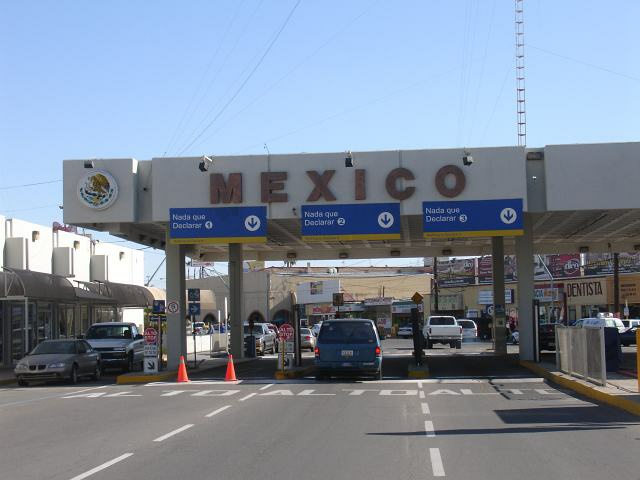
'Crossing the border' is a very difficult decision to make, but millions of people do it. There are different view points about crossing the dreadful border, and it is all about perspective. The two of the photos on the left show what most Mexicans deal with when crossing the border (illegally). As for Americans, there is a lengthy process to ensure the safety of both countries. From an American perspective (crossing the border legally), going into Mexico sounds like this:
Related image

"The road into Tijuana is
Image result for us mexico border checkpoints
Security checkpoint for people entering
Mexico.
clogged with guns and cars and men in uniform, the pageantry of American panic." (Jamison 60)


Works Cited


"BORDERLAND." NPR. NPR, n.d. Web. 27 Apr. 2017.


Child Labor. N.d. Simplebooklet. Web. 27 Apr. 2017.


"Donald Trump's Mexico Wall: Who Is Going to Pay for It?" BBC News. BBC, 06 Feb. 2017. Web. 27 Apr. 2017.

"Hispanics and Latinos in Industries and Occupations : The Economics Daily." U.S. Bureau of Labor
Statistics. U.S. Bureau of Labor Statistics, 9 Oct. 2015. Web. 04 May 2017.

Jamison, Leslie. The Empathy Exams: Essays. Minneapolis, MN: Graywolf, 2014. Print.


They Come To America. Perf. Undocumented Illegal Immigrants. Youtube. N.p., 29 July 2012. Web. 27 Apr. 2017. .


Yee, Vivian, Kenan Davis, and Jugal K. Patel. "Here’s the Reality About Illegal Immigrants in the United States." The New York Times. The New York Times, 06 Mar. 2017. Web. 27 Apr. 2017.


Reader's Journal Week 14

Devil's Bait:
"I want to sit down in front of everyone I've heard- listen to their voices in my tape recorder like a child, like an agnostic, like a pluralist. I want to  be the compassionate nurse, not the skeptical doctor. I want to abyss, not the verdict. I want to believe everyone. I want everyone to be right. But compassion isn't the same thing as belief. This isn't a lesson I want to learn." (pg. 55)
This passage really stuck out to me, and I'm not sure why. I think this passage is a great example of the writing techniques and characteristic of Jamison. She writes so personally and effectively- like she knows her audience can relate to whatever she writes. I guess we all want to be compassionate listeners and hear stories from other people. We want to believe these stories because we feel they "sympathetic pity and concern for the sufferings and misfortunes of other people" (definition of compassion). But feeling compassion for someone is different than believing them.
Morphology of the Hit:
"I like the kids. They touched me-literally, my arms, legs, whole body- more than anyone else I'd known. I knew their families by sight and sometimes by name. Many of their mothers sold chewing gum and cashews in parque central next to the bus station. Their fathers and brothers called out "Guapa Chica!" every time I passed. I should have been offended. I wasn't." (pg. 69)
I chose this passage because I work with kids. They really do touch you, everywhere. It's like they have no sense of boundaries- but I don't mind it. They don't know any better, and they are being affectionate. I also recognize families and whose child belongs to who. I feel a connection with these people, since I know their family. I don't personally know the family, but I can see the family and know about them *if that makes sense*. I think this is the feeling that Jamison had when she was describing this part of the book. She has a soft spot for kids and their families, like me.

Tuesday, April 11, 2017

Reader's Journal Week 13

"I spent large portions of each day-pointless, fruitless spans of time- imagining how I would feel if my face was paralyzed too. I stole my brother's trauma and projected it onto myself like a magic-lantern pattern of light. I obsessed, and told myself this obsession was empathy. But it wasn't, quite. It was more like inpathy. I wasn't expatriating myself into another life so much as importing its problems into my own."
I chose this paragraph because I think it really shows how Jamison views empathy- and I think many of us view empathy the same way. I think that if I spend hours imagining what it would be like to be _____, then I can truly understand how that person feels. It almost seems selfish to spend so much time of our perfect lives imagining what a couple hours of life would be like if we were thinking of someone else in a terrible situation. Because after we are done imagining, we go back to our regular lives. If you see someone in a wheelchair, you empathize with them and imagine what it would be like not to walk. Then you keep walking down that street, and forget about the person who was wheeling themselves in the opposite direction. It seems like sometimes empathy replaces pity.

Saturday, April 8, 2017

Research Paper Introduction and Background Information


There are many issues that have surfaced in recent years, but few have stirred the pot as much as Planned Parenthood. Planned Parenthood Federation of America, or PPFA for short, has been the source of much controversy, especially in politics. Currently, there is debate about whether or not the government should fund Planned Parenthood services. Although these issues are causing a divide among Americans, Planned Parenthood needs government funding because it is a vital source of resources and information for the people who cannot afford regular medical care.

Planned Parenthood was originally founded by Margaret Sanger. Her mission was to create a safe place for women to get resources and information about limiting family sizes. Her main goal, as The Public Writing and Speeches of Margaret Sanger points out, was to create a “one-stop-shop” for women to get birth control, contraceptives and information about sex and sexually transmitted infections. Sanger created Planned Parenthood because “Events converged to make fertility control programs increasingly needed and wanted in many parts of the world in 1954.” (qtd Sanger 1954). She wanted women to have the option of controlling her family size and sexual health, to prevent the spread of STI’s and reduce the number of unwanted pregnancies.